What is Plastic Injection Mold and How Does It Work?
Plastic Injection Molds play a crucial role in the manufacturing process. They enable the production of complex shapes and designs. This method is widely used in various industries, including automotive, electronics, and consumer goods.
The process begins with heated plastic material being injected into a mold. Once cooled, the plastic solidifies and takes the mold's shape. This efficiency leads to rapid production, saving both time and resources. However, the precision needed for effective molds can present challenges. Small errors in design can lead to significant flaws in the final product.
Understanding the mechanics of Plastic Injection Molds is essential for improving design and manufacturing techniques. Molds require careful crafting. They need regular maintenance to ensure consistent performance. Many manufacturers overlook these critical aspects. This oversight can result in production delays and increased costs. There’s always room for improvement in this complex process.
What is Plastic Injection Molding?
Plastic injection molding is a widely used manufacturing process. It involves injecting molten plastic into a mold to create various products. The global plastic injection molding market was valued at around $340 billion in 2021 and is expected to reach $515 billion by 2028, according to industry reports. This method allows for high efficiency and precision in production.
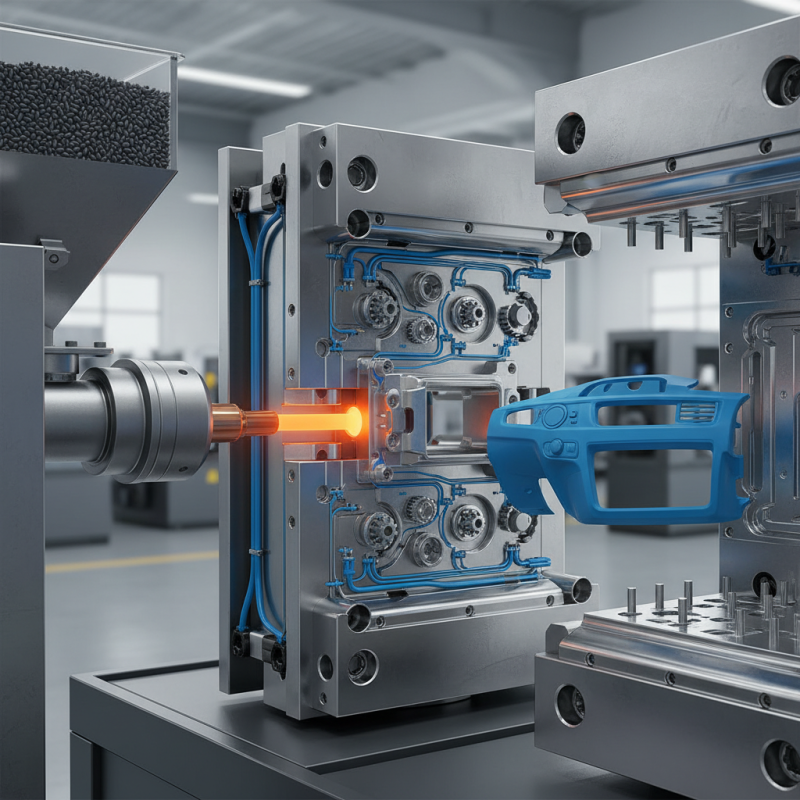
The process starts with material granules being heated until they melt. The molten plastic is then injected into a mold cavity under high pressure. Once cooled, the plastic hardens and takes the shape of the mold. Conditions such as temperature and pressure must be monitored closely. Even small variations can affect product quality, a common issue in this field.
Tips: Ensure proper mold maintenance. It prevents defects and production delays. Monitor temperature closely to avoid overheating or underheating. Using real-time data can significantly improve outcomes. Regularly reviewing process parameters helps in identifying areas for improvement. This iterative reflection can lead to enhanced productivity and reduced waste.
What is Plastic Injection Mold and How Does It Work? - What is Plastic Injection Molding?
| Dimension | Details |
| Material | Thermoplastics (e.g., ABS, Polypropylene, Nylon) |
| Process Steps | 1. Material is heated to melting point
2. Molten plastic is injected into the mold
3. Cooling and solidifying
4. Ejection of the finished part |
| Cycle Time | Typically ranges from 15 to 60 seconds depending on part complexity |
| Advantages | High production rates, precise dimensions, minimal waste, versatile applications |
| Applications | Consumer products, automotive parts, medical devices, electronic housings |
| Cost Factors | Mold design, manufacturing complexity, material type, production volume |
| Mold Types | Single cavity, multi-cavity, hot runner, cold runner |
The Components of Injection Molding Machines
The injection molding machine consists of several key components that work together to create plastic products. The main parts include the injection unit, clamping unit, and the mold itself. The injection unit melts plastic pellets and injects them into the mold under high pressure. The clamping unit holds the mold closed during the injection process. Together, these components ensure consistent production.
In an industry report, it was noted that around 30% of overall production costs can be attributed to inefficiencies in the injection molding process. Therefore, understanding these components is crucial for improving efficiency. Regular maintenance of the machine can help prevent costly breakdowns. Small adjustments in temperature can lead to significant changes in product quality.
Tips: Ensure proper mold cooling to reduce cycle time. Maintain your equipment regularly to avoid unexpected issues. It may also be beneficial to analyze the scrap rate. High scrap rates can indicate underlying problems in the production process. Identifying these issues early can lead to better overall performance.
The Injection Molding Process: Step-by-Step
The injection molding process is fascinating yet complex. It starts with creating a mold, usually made from metal. The mold consists of two halves that fit together perfectly. Once assembled, the mold is secured in place, ready for plastic.
Next, plastic pellets are fed into a heated barrel. Here, they melt and turn into a viscous liquid. The molten plastic is injected into the mold cavity under high pressure. This process requires precision; any mistakes can lead to defects. Air pockets or incomplete filling are common pitfalls. After the plastic cools, the mold opens, revealing the finished part.
Finally, the molded piece is ejected and examined. Quality checks are crucial to ensure the part meets specifications. Issues like warping or surface imperfections may arise. Each cycle produces a new part, but not all are perfect. Continuous evaluation helps improve the process over time.
Common Materials Used in Plastic Injection Molding
Plastic injection molding relies on various materials to create efficient and durable products. Commonly used materials include thermoplastics, thermosetting plastics, and elastomers. Thermoplastics are particularly popular due to their versatility. They can be melted and reshaped multiple times. This makes them ideal for many applications, from toys to automotive parts.
Thermosetting plastics, on the other hand, undergo a chemical change when heated. This results in a hard, inflexible material. Once set, they cannot be remolded. These plastics are often used in electrical components, where heat resistance is essential. It's important to choose the right material based on the specific needs of the product. Misjudging this can lead to product failure.
Elastomers provide flexibility and elasticity. They are often employed in seals and gaskets. However, they may not stand up to high temperatures as well as other materials. Each material has its strengths and weaknesses. Understanding these nuances is key, yet many people overlook this during the production process. Choosing the best material requires careful consideration and testing.
Applications and Benefits of Plastic Injection Molding
Plastic injection molding is a manufacturing process used to create a wide range of plastic products. This technique offers numerous applications across various industries. It is utilized in the production of items such as automotive parts, consumer goods, and packaging materials. This versatility is one of the key benefits of plastic injection molding. It allows for high efficiency and precision, making it an ideal choice for mass production.
One advantage of this method is its ability to produce complex shapes quickly. Designers can create intricate designs that would be hard to achieve with other manufacturing methods. However, one must be cautious about the material selection. Certain plastics can become brittle over time, leading to product failure. Therefore, understanding the material's properties is crucial.
Tips: Always prototype your designs before full-scale production. This step can highlight any design flaws early. Consider the environment when choosing materials. Some plastics are not recyclable. This choice can impact your brand's sustainability efforts. Balancing production efficiency with environmental responsibility is a challenge worth reflection.
 English
 Español