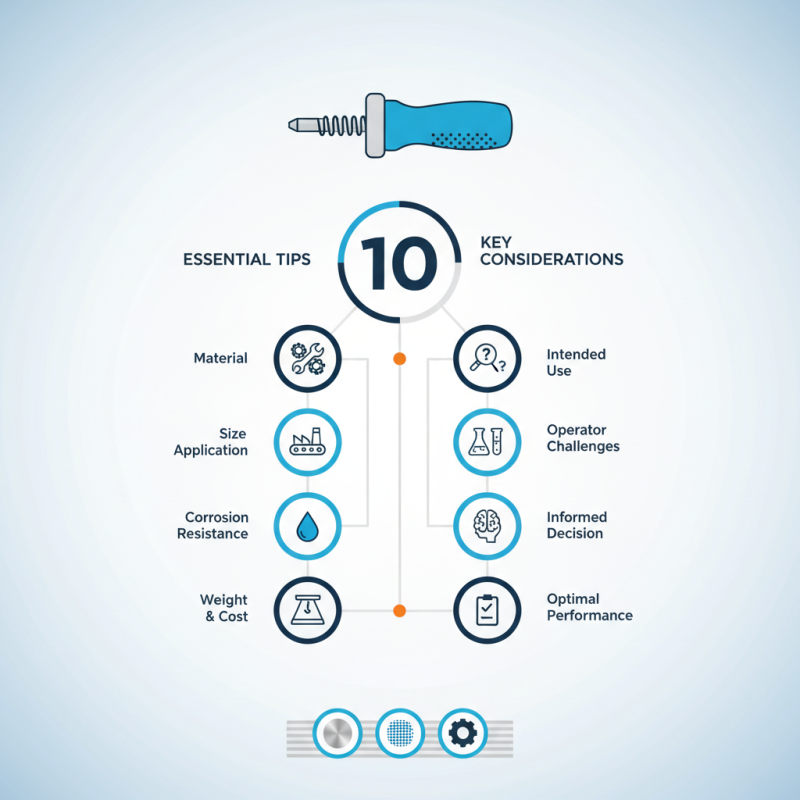
10 Essential Tips for Choosing Hand Retractable Spring Plungers?
Choosing the right Hand Retractable Spring Plunger is crucial for various applications. With numerous options available, making an informed decision can feel overwhelming. Understanding the essential characteristics of these plungers is vital for ensuring optimal performance and durability.
When selecting a Hand Retractable Spring Plunger, consider factors like material, size, and application. Each choice may significantly affect functionality. For instance, stainless steel models offer high corrosion resistance, while plastic variants may be lighter and less expensive. Weighing these options carefully can lead to better outcomes.
Moreover, keeping in mind the intended use is necessary. Operators may encounter challenges if the wrong plunger is selected. Testing different plungers before finalizing your choice is wise. This process allows for better understanding and refinement of what works best in your specific context.
Understanding Hand Retractable Spring Plungers and Their Uses
Hand retractable spring plungers are versatile devices used in various applications. They allow quick engagement and disengagement of components. Commonly found in machinery, furniture, and automotive settings, their main function is to secure or align parts. The design typically includes a spring mechanism that enables easy operation with a simple pull or push action.
When choosing a hand retractable spring plunger, consider its size and material. The right dimensions ensure proper fit and function. Materials like stainless steel provide durability and corrosion resistance. Yet, sometimes users overlook these details, leading to premature wear or malfunction. Checking specifications is crucial for long-term performance.
Understanding the load capacity is equally important. If the plunger can't withstand the intended force, it may fail unexpectedly. Users often underestimate this factor. It's essential to evaluate your specific use case. This reflection helps prevent potential disruptions in workflow or equipment damage. Knowing when to choose a different solution can also lead to improved efficiency.
Key Features to Consider When Choosing a Spring Plunger
When choosing a hand retractable spring plunger, focus on key features that enhance functionality. Consider the material of the plunger. Stainless steel offers durability, while plastic can be lightweight. Corrosion resistance is vital for outdoor applications. Evaluate the plunger's diameter. A larger diameter may provide more holding strength, but can limit space in tight areas.
Look at the spring force, which determines how firmly the plunger engages. A stronger force can hold more weight, but could also require more effort to operate. Pay attention to the stroke length. This distance impacts how much movement you get, affecting precision in applications.
Also, think about the plunger's design. Features like a knurled knob for grip can improve handling. Some plungers have a locking mechanism for added security. Weigh these aspects carefully. Each feature has trade-offs. What works well in one scenario might not suit another. Reflect on your specific needs before making a choice.
10 Essential Tips for Choosing Hand Retractable Spring Plungers
| Feature | Description | Importance |
| Material | Choose corrosion-resistant materials like stainless steel for durability. | High |
| Size | Select the plunger size that fits your specific application dimensions. | Medium |
| Load Capacity | Ensure it can handle the required force for your application. | High |
| Plunger Style | Choose between different styles like standard or locking plungers. | Medium |
| Actuation Method | Consider whether you prefer manual or automated actuation. | Medium |
| Plunger Depth | Depth must match the thickness of the material it will engage. | High |
| Finish | A smooth finish can reduce wear and improve performance. | Medium |
| Temperature Resistance | Must withstand the operating temperature range of your application. | Medium |
| Spring Force | Evaluate the spring force needed for reliable retraction and operation. | High |
| Cost | Balance your budget with the quality and features needed. | Medium |
Material Selection: Choosing the Right Composition for Durability
When selecting hand retractable spring plungers, material choice is crucial for ensuring durability and effectiveness. Common materials include stainless steel, plastic, and brass. Stainless steel offers high corrosion resistance, making it ideal for harsh environments. However, it can be heavier, impacting the overall design. Plastic may be lighter and more affordable but is less durable under heavy loads. Understanding the application helps in making a sound decision.
Many overlook the environmental factors where the plungers will be used. Exposure to moisture or chemicals can degrade some materials quicker than others. Therefore, evaluating the environment is essential in your selection process. A misplaced choice here can lead to frequent replacements, increasing costs and downtime. Balancing performance and longevity requires careful consideration.
In some instances, manufacturers may not provide adequate information on material properties. This can lead to confusion when selecting plungers. Always seek guidance from trusted sources or experts in the field. They can offer insights that may not be obvious from product descriptions. Prioritizing accurate information can save you from making costly mistakes. This critical assessment will enhance the reliability of your selection.
Spring Tension and Load Capacity: Finding the Right Balance
When selecting hand retractable spring plungers, understanding spring tension and load capacity is critical. The balance between these two factors directly affects performance. A recent industry report indicates that choosing a spring with too high tension can lead to prematurely worn components. Alternatively, springs with low load capacities may not engage properly.
Start by determining your application requirements. Understand the forces your components will experience. This analysis will help you avoid under- or overshooting your load capacity. Additionally, consider the environment where the plungers will be used. High temperatures or corrosive settings can weaken springs.
Another vital tip is to review materials and coatings. Certain alloys offer better fatigue resistance. A study from the Engineering Society estimates that 30% of failures in spring plungers come from material fatigue. So, opting for higher-quality materials can enhance durability. Ultimately, invest time in research. Knowing the balance between tension and load will save costs and improve overall functionality.
Spring Tension and Load Capacity of Hand Retractable Spring Plungers
This chart illustrates the relationship between the spring tension (in pounds) and the load capacity (in pounds) for various hand retractable spring plungers. Proper selection requires finding the right balance between these two factors to ensure optimal performance.
Installation and Maintenance Tips for Optimal Performance
Installation and maintenance are crucial for achieving optimal performance from hand retractable spring plungers. Proper installation begins with ensuring that the plunger fits correctly in the designated hole. A tight fit is essential, as a loose fit can cause wear and reduce functionality over time. According to industry reports, nearly 30% of mechanical failures result from improper installation. To avoid this, using alignment tools can help in positioning the plunger accurately during installation.
Regular maintenance is equally important. Periodic lubrication is recommended to reduce friction, which can lead to corrosion. A study indicated that components with regular maintenance last 20% longer than those that do not receive attention. Checking the plunger for any signs of wear, such as scratches or dents, should be part of routine inspections. Ignoring these signs can lead to unexpected downtimes. It is also advisable to clean the plungers regularly to eliminate dirt and debris that can impact their retraction ability. Remember, neglecting maintenance might not produce immediate failures but can lead to long-term inefficiency.
 English
 Español