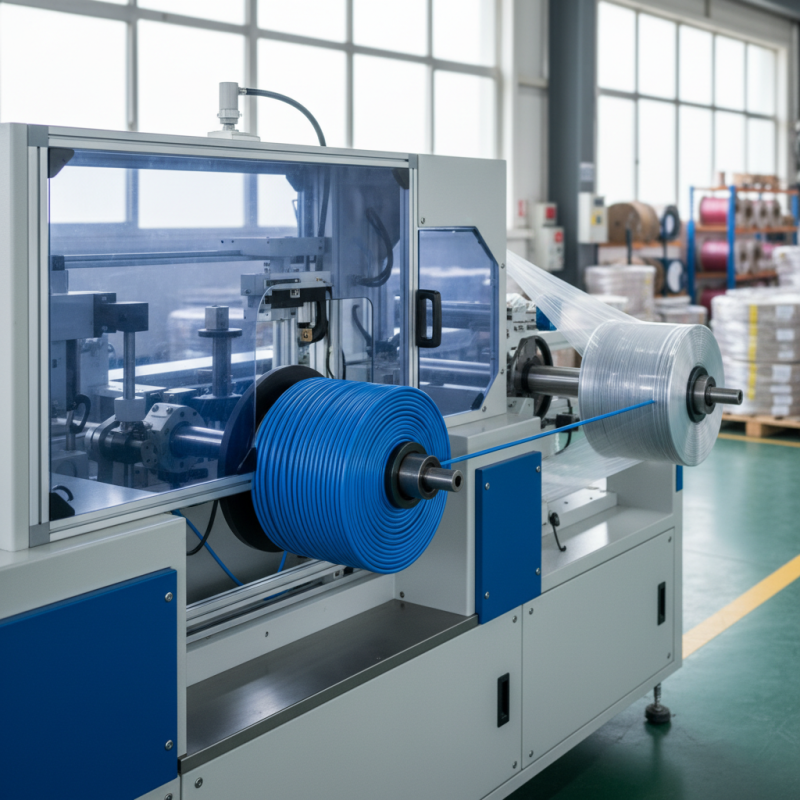
Why Choose a Coiling and Packing Machine for Your Business?
In today's fast-paced business environment, efficiency is crucial. A Coiling and Packing Machine can be a game-changer for many companies. These machines automate the packing process, reducing labor time and costs. They handle materials like cables, wires, and films with ease.
Investing in a Coiling and Packing Machine often leads to improved productivity. You can pack products faster and more consistently. However, businesses must consider the initial investment and maintenance. Not all machines are suitable for every product type. This requires careful planning and research.
Choosing the right Coiling and Packing Machine is essential. It should meet your specific needs and help streamline operations. It’s important to reflect on your company’s unique challenges. Do you need flexibility or speed? Understanding your requirements can lead to meaningful improvements.
Benefits of Using a Coiling and Packing Machine in Manufacturing
In today’s fast-paced manufacturing world, a coiling and packing machine offers numerous advantages. These machines streamline the packing process, reducing labor costs and enhancing efficiency. They automatically coil products, ensuring uniformity for better presentation. This uniformity is important for businesses aiming for a professional look in their packaging.
Using these machines can also minimize human error. Humans are prone to mistakes, especially in repetitive tasks. A coiling and packing machine can consistently perform tasks with precision, helping maintain high quality. This precision can lead to fewer returns or complaints, saving time and resources. However, one must consider the upfront investment. Not every company can afford the initial costs or space for such equipment.
Additionally, integrating this technology may require staff training. Employees might feel overwhelmed by the new system at first. Adapting to change can be challenging. Yet, the long-term benefits of increased productivity and reduced labor might outweigh initial hurdles. Each business must weigh these factors carefully before making a decision.
Types of Coiling and Packing Machines Available in the Market
Coiling and packing machines come in various types, each designed for specific tasks. Some machines focus on coiling products efficiently, while others excel in packing and sealing. Different industries utilize these machines for diverse applications, which can impact the choice for businesses.
For instance, horizontal coiling machines are popular in the textile industry. They handle materials like fabrics and threads. These machines offer precision and speed, which can help meet production goals. Vertical coiling machines, on the other hand, are often used in wire and cable manufacturing. They save floor space and can easily manage heavy materials.
Another type is the automatic packing machine. This machine is crucial for ensuring products are sealed properly. Sometime, there can be challenges with adjustment and calibration. Operators may need training to avoid mistakes. Each type of machine has its unique strengths, but operators must reflect on their specific needs before investing.
Why Choose a Coiling and Packing Machine for Your Business? - Types of Coiling and Packing Machines Available in the Market
| Machine Type | Applications | Speed (units/hour) | Power Consumption (kW) | Estimated Cost (USD) |
| Automatic Coiling Machine | Wire and cable manufacturing | 2000 | 5 | 15,000 |
| Semi-Automatic Packing Machine | Food and beverage packaging | 800 | 3 | 8,000 |
| Fully Automatic Packing Machine | Pharmaceutical products | 1500 | 7 | 25,000 |
| Vertical Coiling Machine | Textile industry | 500 | 2.5 | 12,000 |
| Horizontal Coiling Machine | Cable industry | 1200 | 4 | 20,000 |
How Coiling and Packing Machines Improve Efficiency and Productivity
Investing in a coiling and packing machine can markedly enhance your business's efficiency and productivity. These machines reduce manual labor, streamlining processes that were once time-consuming. They can coil various materials, wrapping them securely for storage or shipping. By automating these tasks, staff can focus on more critical operations, like quality control.
Moreover, coiling machines can adapt to different sizes and weights. This flexibility is vital in meeting diverse production needs. The speed of operation also contributes significantly to overall output. However, transitioning to automated systems may pose challenges. Training employees to use new equipment can take time and resources. Compatibility with existing processes is another consideration.
Ultimately, weighing the benefits and challenges is crucial. Coiling and packing machines can transform workflow dynamics. Yet, they require careful implementation to maximize potential. This transformation might present initial hurdles, but the long-term advantages are undeniable.
Why Choose a Coiling and Packing Machine for Your Business?
Coiling and packing machines significantly enhance operational efficiency. The following chart illustrates the efficiency improvements in various business operations after implementing these machines.
Factors to Consider When Choosing a Coiling and Packing Machine
Choosing the right coiling and packing machine is essential for efficiency. Evaluate your production needs carefully. Are you focusing on speed or precision? The speed might save time, but precision ensures high-quality products.
Consider the dimensions of your workspace. A larger machine may not fit nicely. Ensure you have enough room for operations. It’s vital to think about the materials your products are made from. Some machines work better with specific materials. If you overlook this aspect, production issues could arise.
Another point to ponder is maintenance. Machines require regular upkeep. Neglecting maintenance can lead to costly repairs. Ask questions about the replacement parts. Availability is crucial to avoid long downtime. You should also think about the training for your staff. Not all machines are intuitive. Investing time in training can pay off in the long run.
Cost Analysis: Investing in a Coiling and Packing Machine for Your Business
Investing in a coiling and packing machine can significantly enhance efficiency. According to industry reports, companies can reduce labor costs by up to 30% with automation. This technology streamlines coiling and packaging processes, minimizing human error. With increased accuracy, businesses can maintain higher product quality.
However, the initial cost can be daunting. A typical coiling machine may range from $10,000 to $50,000. While this investment is substantial, the long-term savings are compelling. A study indicated that businesses experience a return on investment within two years. Still, it's crucial to analyze your specific needs and production volumes before committing. A misaligned choice can lead to underperformance and waste.
Additionally, a coiling and packing machine can occupy considerable floor space. Smaller operations may face logistical challenges. It's important to consider not just costs but also space and compatibility. Balancing these factors is essential for maximizing the benefits of this technology.
 English
 Español